


Muscle-Sparing Total Knee Approach
Muscle-Sparing Total Knee Approach
A Less Disruptive Approach to Knee Replacement
If knee pain is limiting your ability to enjoy everyday life, a total knee replacement may help restore your mobility and reduce chronic pain. Our orthopaedic surgeons offer a muscle-sparing total knee approach designed to preserve the muscles and soft tissues surrounding the knee whenever possible available at Marshall Health Network - Cabell Huntington Hospital.
By minimizing disruption to healthy tissue, advanced robotic-assisted techniques combined with muscle-sparing surgical approaches may help patients experience less pain after surgery, regain movement sooner and begin rehabilitation more quickly.
For appointments or referrals, call Marshall Orthopaedics at 304.691.1262.
What Is a Muscle-Sparing Total Knee Approach?
Traditional knee replacement surgery often requires cutting through portions of the quadriceps tendon or joint capsule to access the knee joint. A muscle-sparing approach uses specialized surgical techniques that lifts and moves the quadriceps to minimize the impact on the muscles and tendon.
The damaged portions of the knee joint are removed and replaced with durable artificial components while preserving as much healthy muscle and tendon as possible.
Benefits of a Muscle-Sparing Approach
While every patient's recovery is different, potential benefits may include:
- Less damage to muscles and surrounding soft tissue
- Reduced postoperative pain
- Less swelling
- Improved early knee function
- Quicker return of strength and mobility
- Ability to start physical therapy sooner
- Shorter hospital stay
- Faster return to many daily activities
Who May Be a Candidate?
Not everyone is eligible for this type of approach. Your surgeon will determine if a muscle-sparing technique is appropriate based on your knee anatomy, overall health and the complexity of your condition.
What to Expect
Prior to surgery, your care team will perform a comprehensive evaluation, including imaging, physical exam and review of your medical history. Together, you'll develop a treatment plan tailored to your needs.
During surgery, your surgeon removes the worn cartilage and damaged bone while preserving surrounding muscles and soft tissues whenever possible. High-quality implants are then positioned to restore the knee's alignment, stability and function. Most patients begin moving their new knee shortly after surgery. Physical therapy starts early to improve flexibility, strength and walking ability. While recovery timelines vary, preserving the muscle may help some patients regain mobility more quickly during the early stages of healing.

Matthew W. Bullock, DO, MPT, FAAOS, FAOA
Clinical Interests:
- Joint Replacement
- Knee & Hip Care
- Orthopaedics
- Surgery - Minimally Invasive
- Surgical Services
- Telemedicine
Locations:
- Marshall Orthopaedics - Huntington 304.691.1262
- Marshall Orthopaedics - Pea Ridge 304.781.3626
- Marshall Orthopaedics - Teays Valley 304.691.6710

Alexander T. Caughran, MD
Clinical Interests:
- Joint Replacement
- Knee & Hip Care
- Orthopaedics
- Surgery - Minimally Invasive
- Surgical Services
- Telemedicine
Locations:
- Hershel "Woody" Williams VA Medical Center 304.429.6741
- Marshall Orthopaedics - Huntington 304.691.1262
- Marshall Orthopaedics - Teays Valley 304.691.6710

Felix H. Cheung, MD
Clinical Interests:
- Joint Replacement
- Knee & Hip Care
- Oncology - Orthopaedic
- Orthopaedics
- Surgery - Minimally Invasive
- Surgical Services
- Telemedicine
Locations:
- Edwards Comprehensive Cancer Center 304.399.6500
- Marshall Orthopaedics - Ashland 606.327.0036
- Marshall Orthopaedics - Huntington 304.691.1262
- Marshall Orthopaedics - South Charleston 304.342.3891

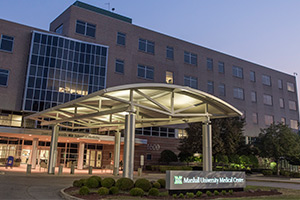
Marshall Orthopaedics - Huntington
A provider-based department of Cabell Huntington Hospital
Marshall University Medical Center
1600 Medical Center Drive
Suite G500 (Ground Floor)
Huntington, WV 25701
Phone: 304.691.1262
Toll-Free Phone:

Marshall Orthopaedics - Pea Ridge
4270 U.S. Route 60, Suite 100
(Note: may still appear as 5636 U.S. Route 60 in some GPS systems.)
Huntington, WV 25705
Phone: 304.781.3626
Toll-Free Phone:
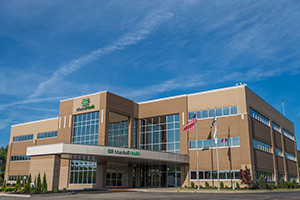
Marshall Orthopaedics - Teays Valley
An outpatient department of Cabell Huntington Hospital
Marshall Health - Teays Valley Main Building
63 Corporate Center Drive
Suite 140
Scott Depot, WV 25560
Phone: 304.691.6710
Toll-Free Phone:
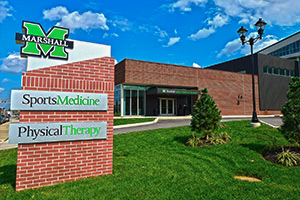
Marshall Sports Medicine Institute
2211 Third Avenue
Huntington, WV 25703
Phone: 304.691.1880
Toll-Free Phone: